

The small island of Aruba in the very south of the Caribbean has a lot to offer. Anyone who knows me a little knows that I unexpectedly fell head over heels in love with ‘One happy island’. To be honest, I originally only came to Aruba because of Flamingo Beach (yes, totally plemplem …) and otherwise I hardly informed myself and preferred to be surprised. And that has definitely succeeded: Aruba completely knocked me out of my socks with its fantastic beaches and a landscape that couldn’t be more contrasting! I already showed you that Aruba can do more than just beaches and real adventure with the Natural Pool , today the second trick follows:Snuba Diving in Aruba ! Snu … what ?! Doesn’t that mean scuba diving and is it just normal diving? No not really. Here comes the explanation: What is snuba diving? Snuba Diving is a word creation from the two terms Scuba Diving (diving) and Snorkeling (snorkeling). And that’s exactly what Snuba Diving is: a mix of both disciplines. I don’t know about you, but I think snorkeling is only moderately exciting. In the sea, water constantly sloshes into the snorkel, the glasses fog up every few seconds, there is water in there anyway and … and oh, it just sucks. At least a little. Not to snorkel in the Caribbean is of course not an option. So I started looking for ways to get to see as much as possible of the colorful underwater world of Aruba without a diving license – and I came across Snuba Diving. How exactly does Snuba Diving work? The principle is very simple: Instead of heavy diving equipment and oxygen bottles on your back, Snuba Diving has an approx. 20 m long hose that regulates the air supply. The oxygen source remains on top of the boat and you can dive down about 20m with the hose in your mouth. Without a diving license, without heavy equipment . The air is usually enough for a dive of about 30 minutes. Snuba Diving in Aruba: Diving on the SS Antilla Aruba is known as one of the most beautiful diving areas in the world: In addition to the colorful Caribbean underwater world, there are also some shipwrecks to discover, the waters around Aruba are a true cemetery for ships among divers. The SS Antilla is a former German cargo ship, built in 1939 and sunk again in 1940 by a fire that it started. It is located about 700m off the coast of Aruba at the level of Arashi Beach at a depth of almost 20m – so just right to explore it by snuba diving. The SS Antilla is now considered one of the most beautiful wrecks in the Caribbean, even though it broke in the middle. To get it straight: the dive to the wreck of the SS Antilla was more than impressive! This is how you book your diving adventure Of course, you cannot do a Snuba Diving tour on your own. There are plenty of excursions tailored to the tastes of American tourists on Aruba, and a snorkeling tour on the SS Antilla * is one of the most popular tours in Aruba. As part of this tour, you can also book the Snuba Diving package. You will take a catamaran from Palm Beach (where all tours start at Palm Pier) out to the Caribbean Sea up to the height of the SS Antilla shipwreck. I strongly recommend booking in advance!Only a small group of people can be supervised at Snuba Diving per tour, places are limited to approx. 6 people. You can of course also book the snorkeling tour spontaneously, but the places for snuba diving are probably already occupied too soon. Aruba Arriba! Course of the Snuba Diving Tour As already mentioned: The contents of the snorkeling and diving tour are clearly tailored to American tourists. This not only includes sandwiches on board, but also a cocktail called Aruba Arriba, which is touted as the national drink. So far we were of the opinion that the island’s own Balashi beer was Aruba’s pride and joy, but be it – the Aruba Arriba tastes good! The Americans on the boat see it the same way and it doesn’t take long before the pack of party-mad Americans, some with flippers on their feet, are doing a round of line dance on the catamaran (Yes. OMFG. I will probably never get rid of this picture … ) That this is actually about snorkeling seems to have moved into the background somehow. With 1-2 Aruba Arriba in mind, we willingly let our Snuba Diving instructor Angelo strap on the equipment and show us a few tricks, for example how to get water that has run underwater out of the diving goggles. As a novice diver, I have to get used to breathing evenly with a mouthpiece, and in the first few moments underwater I feel panicked. But Angelo manages to get me on the right track and slowly we are sinking deeper and deeper. Aruba’s underwater world: Colorful Caribbean fish and a sunken shipwreck What awaits us down there just below the surface of the Caribbean Sea beats what we have seen so far while snorkeling in Aruba: Lots of colorful fish up close, corals, better-not-to-touch sea urchins and a lot of stuff , of which we still do not even begin to know what it is. Our teacher Angelo shows us what we can touch and what we should rather keep our hands off and watches us newbies very carefully so that we don’t accidentally make nonsense. He also heroically uses a GoPro the whole time, thanks to which we can now delight you with wonderful underwater shots of our snuba diving excursion. I hope you are as enthusiastic about these impressions as I am. For me, snuba diving in Aruba was my first time diving and it completely flashed me! So much so that since then I have definitely wanted to get a diving license in order to be able to discover a lot more of this crazy part of the world that has remained largely hidden from me so far. Until then, I’ll definitely be back for a new Snuba Diving adventure right away!

Sights in Exuma: 10 must-see highlights
The chances that you’ve never heard of Exuma before are relatively high. Exuma … where is that please? And what is that? And why should you care? I’ll tell you: Exuma should be on your bucket list immediately (!) If you are looking for incredible underwater worlds , the clearest turquoise sea and the most incredible dream beaches in the world. The Exuma Cays are a chain of islands in the Bahamas, still relatively unknown as a travel destination in Germany and they have so far been completely spared from cruise tourism in the Caribbean . And the most important thing: they are hard to beat in terms of beauty. The main island is Great Exuma with the capital George Town, which has just about 1400 inhabitants. It is incredibly difficult to find good information about Exuma, which is why we ended up sitting completely unprepared on our plane to George Town. Ultimately, we asked the locals on site on Great Exuma what you can do here and what you should definitely see. The result is a lot of great tips, including a few real insider tips that are guaranteed not to be found in any travel guide. So if you are planning a Bahamas vacation in the near future and also want to visit Exuma, then you should definitely read on now. I’ll show you 10 highlights and sights on Exuma that you shouldn’t miss. Here we go! I have to pack my equipment for the Bahamas My camera: Sony Alpha 6500 * Two lenses: an all-round lens from Sigma * (perfect for traveling and affordable, it is connected to the Sony 6 series together with an adapter * ) and a 30mm fixed focal length from Sigma * GoPro underwater camera * and a matching dome for half-half recordings * Waterproof sunscreen without microplastics with a mineral filter * (for the sake of the environment and the sea) DJI Spark drone * Nobite mosquito spray * (the best!) Exuma: home of the swimming pigs The reason why Exuma has come into the focus of most people in the first place couldn’t be cuter: The swimming pigs of the Bahamas . The bristle beasts have become the main attraction of the Bahamas in recent years. Fortunately, it really has to be said, the island on which the pigs live is so remote that the day cruise tourists who land in Nassau hardly have the opportunity to integrate a trip to the pigs into their limited stay . If that were different, the pigs would probably already be completely overrun by tourists and dead. There is no way around the Exumas to see the swimming pigs. You can find out everything about how to get here and the tours offered here . Snorkeling in the Thunderball Grotto The Thunderball Grotto is located near Staniel Cay and is so named because scenes from the famous James Bond film ‘Thunderball’ were first filmed here in 1965. In the grotto there is an insane underwater world with tons of colorful fish to discover. To get there, you either have to rent a boat or take a guided tour of the Exuma Cays . In general, an Exuma Ocean Safari as offered from Great Exuma is a very good opportunity to get to know the most beautiful part of Exuma: the sea. In such a tour, in most cases not only the swimming pigs and the Thunderbal Grotto, but also the next two highlights are integrated: Swim with sharks at Compass Cay Swim with sharks? Yes, you read that right! A group of Nurse Sharks lives on Compass Cay. Nurse sharks are completely harmless to humans (even if it is very difficult to believe). The sharks at Compass Cay are so used to the visitors that they voluntarily allow themselves to be petted and at high tide even swim on the jetty built into the water to dust off food. You can snorkel with the sharks and pet them without fear at Compass Cay. We would have loved to have packed one and taken one with us, they were so friendly ? Pet iguanas on Iguana Island I don’t know whether the small iguana island in the Exumas is actually called Iguana Island. I suspect that it has no name at all, because not all of the approx. 360 cays of the Exumas have a name at all, as most of them are actually uninhabited. Not so Iguana Island – hundreds of iguanas live here! If you are afraid of lizards, this highlight on Exuma is sure to be pure horror. The iguanas come out of the bushes as soon as a boat approaches the beach. As soon as you have solid ground under your feet, you will immediately get on your skin. Those who have salad with them are well advised ? You can read more about visiting Iguana Island and our ocean safari through the Exuma Cays here . Swim with sea turtles at Hoopers Bay Attention, now comes a real insider tip that you will probably not find in any travel guide in the world: The best place on Exuma (and maybe even in the whole of the Bahamas) to meet sea turtles is Hoopers Bay. Hoopers Bay is located on the main island of the Exumas, Great Exuma. You will probably have your hotel on this island anyway, just like we did (we stayed at the Two Turtles Inn *), so a visit to Hoopers Bay is an absolute must! With a length of approx. 60 km, Great Exuma is much larger than you initially think and so when we arrived we were actually quite overwhelmed at first what we should do here. Since we really wanted to see sea turtles or even swim with them, we asked the locals if there was a beach on Great Exuma where the Sea Turtles frolic more often than elsewhere. The answer: Hoopers Bay. And the kicker is: you can even feed them! Get some frozen fish at the supermarket in George Town and you’ll have the time of your life! ? (but watch out for your fingers, the turtles are sometimes a bit clumsy). Stocking Island: starfish and stingrays Just a few hundred meters from Great Exuma is Stocking Island, a small island at the height of George Town. You can reach Stocking Island by ferry, once an hour Elvis’ Water Taxi will bring you there and back for about $ 15 per person . The crossing takes less than 15 minutes (depending on how many friends of the driver want to be dropped off somewhere in between). On Stocking Island you will find wonderful beaches, absolute tranquility and with Chat ‘N’ Chill a beach bar like from a Caribbean picture book. The prices in Chat ‘N Chill are not cheap, as is typical of the Bahamas, but the cocktails were surprisingly really, really tasty! 9 $ for it …. free. YOLO ? The Chat ‘N Chill has a few special pets, by the way: Tame stingrays. There are always several rays romping about on the beach, they swim bravely to the shore and even let themselves be petted. The reason is, of course, the food again: The Chat ‘N Chill piles up the empty bowls of the conch (conches …?) In the water and so there is always a small snack to get for the rays. If you should find fishy scraps somewhere, you can carefully place them on the palm of your hand and feed the rays with them. You will also encounter the rays while swimming and snorkeling in the water – but here I would recommend keeping a respectful distance. They are still stingrays and even if they look peaceful, an accidental sting of their sting can kill a human. There are also giant red starfish on Stocking Island, and there is even an entire starfish beach. We found one of the fine specimens washed up on the beach and quickly took a few snapshots before we brought it back into the deep water. Even when snorkeling you will see starfish lying in the seagrass on the bottom again and again. Do us a favor: Even if it is unclear how much it really damages the stars if they are touched or even taken out of the water – please don’t do it. Dive briefly down and touch the star is probably not a problem, but it is better not to take it out of the water. We did get the information from locals that the starfish can survive on land for up to 24 hours and that touching them is not a problem either, but I don’t know if that’s really true. Tropic of Cancer Beach on Little Exuma If you still have time and rent a car, a detour to Little Exuma is a must. Little Exuma is the little sister island of Great Exuma and is connected to it by a bridge. The Tropic of Cancer Beach is one of the most beautiful and at the same time lonely beaches in the world. The sand is so bright that your eyes will water and it is very likely that you are completely alone on the beach. The approach to the beach is quite bumpy and complicated as it is unfortunately not signposted. If you feel like watching a video (unfortunately not mine) and can live with the fact that your eyes are about to get wet, shiny eyes – please be very: Since we have seen it with our own eyes: nothing has been edited on this video. The water throughout the Exumas glows just as blue as in this video. To be honest, it looks even more intense in real life … believe me, the Bahamas, and Exuma in particular, is completely crazy. Jolly Hall Beach Jolly Hall Beach is admittedly nothing special. It’s basically just another brilliant white stand with turquoise blue water on Exuma’s main island, Great Exuma. Why I still count it among the best spots in Great Exuma is for the simple reason that it is George Town’s “house beach”. If you live in George Town, for example like we did at the Two Turtles Inn *, Jolly Hall Beach is the closest beach that you can reach without a rental car. Don’t worry, Jolly Hall Beach isn’t ugly, it’s just a perfectly normal, super beautiful white Caribbean beach without special features such as sea turtles, dolphins, tame rays or starfish (which doesn’t mean you won’t run into them there!). National dish Conch: eat like a local If there’s one thing in the Bahamas, and Exuma in particular, that you absolutely shouldn’t miss, it’s Conch (read: Konk ). The conch looks like a clam, but it is quite a large marine snail. The conch seems to be something like the national dish of the Bahamas, because it is available in all possible preparation forms and felt on every corner: conch salad, conch fritters, conch burger, conch with conch … We tried conch salad and conch burger and both was extremely tasty! By the way, you don’t have to go to a real restaurant for this, you won’t find that on Exuma anyway. Just order a dish with conch at any hut you come across on the way. Street food, like everywhere else in the world, is the better choice in the Bahamas anyway ? Incidentally, the lobster at Santanna’s Bar & Grill on Little Exuma should also be divine . The Conch Burger and Pig Roast (… .no, not the pigs from Big Major Cay ) every Sunday in Chat ‘N’ Chill on Stocking Island are legendary! Cocoplum Beach Cocoplum Beach is located in the very north of Great Exuma and is particularly known for one thing: As the sea level falls at low tide, more and more sandbars become visible. Not only does it look beautiful, it is also great for finding sand dollars. Sand Dollars … what’s that again? Short answer: Sand dollars are a type of sea urchin. They are very flat and you can touch them safely. If you want to take a sand dollar home with you as a souvenir, look out for the bright, almost white, skeletal dollars. These are the dead sand dollars, they are often difficult to spot in the white sand. The dark, gray sand dollars are alive and should of course not be collected and taken away. You see, there is an incredible amount to discover on the Exuma Cays. If you’ve thought that there’s not much more you can do in the Bahamas than lying around on the beach, then hopefully I’ve taught you better. One thing is clear: the real sights and highlights of Exuma are not on land, but in the water. For me, the Exumas are not just a few individual islands or a chain of islands, but somehow Exuma is everything – the islands, the bright blue crystal-clear sea, the underwater world, the sandbanks, the animals, the people, the tranquility, the seclusion, the Satisfaction and the deep connection to their homeland that every single native lives and exudes. The Exuma Cays as part of the Bahamas are something very special and, for me personally, one of the most incredible places in the world.

Hiking in the Blue Mountains: At sunrise over the rooftops of Jamaica
If you come to Jamaica, you usually have pictures of Caribbean sandy beaches, cool drinks and chilled reggae music in your head. So far right – but did you know that there are real mountains in Jamaica and that the Blue Mountains in the east of the island are an absolute hiking paradise? The Blue Mountains stretch from the state of Portland down to the capital, Kingston. At the highest point, Blue Mountain Peak, you can experience one of the most breathtaking sunrises in the Caribbean. In May 2017 I finally managed to make this long-cherished wish come true – experience the sunrise in the Blue Mountains. One would think that as a local resident you would certainly be able to enjoy such experiences all the time, but even as a quasi-local you need two things for a hike to the Blue Mountain Peak: time and good planning. No sooner said than done: Together with two friends we wanted to climb the highest point in Jamaica. The hike to Blue Mountain Peak was meticulously planned and prepared in advance – at least by me, because I was the only German in the group. I gathered all the information I could get to make the trip as nice and cheap as possible. The Blue Mountains in Jamaica The Blue Mountain Peak is the highest peak in Jamaica with a height of 2256m and the sixth highest point in the Caribbean. The summit is located in the Blue and John Crow Mountains National Park, which has been a UNESCO World Heritage Site since 2015. One of the world’s most famous and most expensive types of coffee, Blue Mountain Coffee, comes from precisely this region. Despite the tropical climate, temperatures in the Blue Mountains can drop sharply overnight from around 1500 meters above sea level. As is well known, the temperature at the summit is more often around 0 ° C at night. The ascent to the Blue Mountain Peak is usually organized so that you arrive at the summit at sunrise. Why? Because that’s a pretty cool experience. The last place to stay overnight before climbing the peak is called the Portland Gap and lies at an altitude of about 2030m. If you think of camping in the mountains – close! That is forbidden here. Hiking in the Blue Mountains Now that the facts were clarified, the hike, for which we had planned a whole weekend, could actually begin. Since we all agreed that it would be a good idea to organize the excursion cheaply, we decided to use public transport to get to the last point accessible by car. Since 75% of the group consisted of local Jamaicans, the route was quickly clarified: we chose the capital Kingston as the meeting point , as there are the most transport options and the best-developed roads to the Blue Mountains. Via the Peak Trail from Portland Gap to Blue Mountain Peak We initially wanted to go from Kingston Halfway Tree to Papine. From the Square in Papine it should go on to Mavis Bank and from there the last mobile stage to Whitfields Hall / Abbey Green . The last stage was (and is certainly still) only accessible by off-road vehicle, without all-wheel drive you don’t get very far in this area. From Abbey Green you should then walk towards Portland Gap begin (approx. 3.7km). We planned to arrive there in the evening to get a few more hours of sleep before the ascent to the summit – which, as already mentioned, is most beautiful when you arrive shortly before sunrise, which is why we planned to leave Portland Gap around 2:00 a.m. to the Blue Mountain Peak . So much for the planning. Once in the capital, Kingston, the first challenge was to find an ATM that would accept my Visa card. Basically this is not a problem. That day, however, it was one, and we had to go to a total of five different banks until a machine took pity on it and threw out some money. Experience has shown that in many countries it makes sense to always have some cash with you. Jamaica is one of those countries. And if I may allow myself the comment at this point: Do something good for the Jamaican economy and pay with the local currency, the Jamaican dollar. Although it is possible to pay in US dollars in many places, the prices are stated in JMD everywhere (except at tourist hotspots). Machetes, flip flops and the need for food The next surprise was when we met our friends at the Halfway Tree (Kingston transportation center). One of the two actually appeared in flip flops, despite multiple warnings (0 ° C at the summit … you remember) and the other had two machetes in his luggage. I would like to advise against both at this point if you are not native Jamaicans or have roamed through tropical jungle forests from childhood. I, or rather my husband in particular, were packed with groceries, hammocks, sleeping bags and extra blankets . Since we had already lost some valuable time looking for a functioning ATM, we had to hurry and get to Papine as quickly as possible get. If you don’t know your way around the Halfway Tree, ask the nice taxi drivers here. These will lead you to a side street where at least 3-5 taxis are always waiting for passengers to drive towards Papine. When you arrive in Papine am Square , you have the last chance to buy groceries at reasonable prices or to have a bite to eat again somewhere. So if you haven’t packed supplies for the hike, you should look around in a supermarket here again, because Mavis Bankis pretty small. Small buses and taxis run regularly in the square towards Mavis Bank, so it is actually no problem to travel from there by public transport for a low price. Actually. However, it seems that from an unspecified time onwards every afternoon (almost at rush hour) the buses are so overcrowded that it is quite difficult to get a seat without a relationship with the driver. Let alone four places. So we couldn’t help but take a taxi to Mavis Bank – which stopped halfway. But that wasn’t really a problem, because after only about an hour (not worth mentioning by Jamaican standards) the journey continued again. In Mavis Bank arrived, it began slowly to dawn. And then at the latest it dawned on me that my beautifully laid out plan would definitely not work. By now we should have finished the first 4km of our hike and have dinner at the Portland Gap ranger station . Fortunately we met a nice fellow traveler from Switzerland, who told us about a camping possibility. So the plan was quickly reorganized by the group and we decided to go to Whitfield Hallto drive, spend the night there and only start hiking to Portland Gap the next day. So we chartered an off-road vehicle and the driver brought us safely to the destination of the Swiss fellow traveler in the darkness of the jungle. The place we arrived at is close to the Abbey Green coffee farm and the last passable point on the trail to Blue Mountain Peak. At this point I would advise you to write down the driver’s phone number, as you will be driving back to Mavis Bank in the foreseeable future. Portland Gap: Spend the night in the Blue Mountains After a brief, very uncomfortable conversation with the owner of the property, in whose garden we had planned to hang our hammocks until the next morning, we changed our plans again. Get out of here, this person was spooky and we wanted to go straight to Ranger Station Portland Gap. Why not walk a 4km long, unknown trail in the darkest darkness? That shouldn’t be a problem for three Bush-approved Rasta men in sandals and a well-prepared, stubborn German woman. Ha! It wasn’t. To be honest – I really underestimated the first 500 vertical meters of the ascent, which were hidden in the small 4km. Quite overtired but also gleefully we stumbled through the gates of the Portland Gap Ranger Station . Even if it was shortly before 10 p.m., it shouldn’t be a problem to find someone in charge. Actually. There was light and some noise in the ranger station, but no ranger. Nevertheless, a construction worker received us, who kindly gave us the key to one of the not quite finished wooden houses and explained that the ranger was at a party. At this point I should perhaps mention again that you can finally buy food in Papine – but there are still bars in Jamaica even behind the last mountain. Tired and satisfied, we stretched our hammocks in the rustic room. Now the time for the triumph of my German diligence had come: there was enough food for a midnight dinner and with the two extra blankets, the flip-flops also got a little warm again. Almost two hours later we (not) continued fresh and lively to the last stage of the hike to Blue Mountain Peak. It was already 2:30 in the morning and it felt like you had to hurry so as not to miss the magical moment of sunrise. So three out of four members of our group set off without stopping at the single tap (the rest of the way). Or to notice that the flip-flop Rasta was the only one with presence of mind to fill his bottle with water, Since we were on our way to Portland Gap overnight had already used our flashlights, the juice in the batteries was of course limited for the last 6km of the again nightly ascent. You are slowly realizing it: planning is everything. But no matter, you just have to walk a little slower through the dense darkness of the jungle – which is not a problem if you are in a hurry and have hardly slept anyway. Fortunately, the flashlights only gave up shortly before dawn when we were already close to our destination. The particularly exciting thing about this excursion was really not knowing exactly where the journey was going the entire way there. If you neither know nor see an environment and just walk towards it without any visual clues, an extraordinary feeling arises (of helplessness …?). It requires a special level of concentration and willpower, which we find difficult to generate in times of extensive signage. Fortunately, someone at the summit told me that I had now reached the summit – without a sign I would hardly have recognized it at first (just kidding). Here we go: At sunrise on the Blue Mountain Peak Arrived at the highest point of the beautiful island of Jamaica, the sun was not long in coming. It almost looked as if the fiery red ball would rise in front of you at eye level. Pleading as if to salute the sun, one saw all the quivering summiteers stretch their numb fingers (and toes) for the first rays of sunshine. Slowly the warm light pushed over the mountain peaks and the whole beauty of the Blue Mountains finally revealed itself. The whole cursing about the exhausting night hike, the disorganization and the mishaps was suddenly forgotten. We spent a couple of hours on the summit because it is a really unique place. The climate is different from the rest of the island and the views are indescribable. There is a tall metal frame that was built as an additional lookout. From there you overlook four federal states of the island and can also look down to the sea. It is breathtaking to watch how the sunbeams suck in the morning dew and it condenses into clouds around you. Speaking of clouds – the weather on Blue Mountain Peak is just as changeable as anywhere in the mountains. As beautiful as the morning was, around noon thick rain clouds came in and we decided to start the descent quickly before we got wet. A second highlight was definitely the way back to the ranger station. Only now in daylight could the mountains be seen in their full size and splendor. Just like the changing vegetation, which grew steadily from the barren, low bushes at the summit the further you descended. A little deeper, outside the border of the national park, coffee fields of the famous Blue Mountain Coffee line the path as well as majestic eucalyptus trees. By the way, on the way down you can easily buy coffee beans from the local coffee farmers. Just ask when you meet someone … they will definitely help you. Tips for hiking in the Blue Mountains I have already given you a few tips on the way, but you are sure to have many more questions about planning your hike to Blue Mountain Peak. Here we go: Does it cost anything to stay at Portland Gap? And how can I imagine the Ranger Station? Yes, staying in the cabins costs something. The Ranger Station was still under construction in the summer of 2017, but already has outside toilets, washing areas, etc. More detailed information on prices and availability can be found here: Portland Gap Cabins (you have to call or write an email to book) Is there an entrance fee for the national park? Yes there is a fee. However, this is fluctuating, the current fees can be found on the website of the national park. The people there are friendly and accommodating. Since we didn’t meet the ranger until after the descent, we didn’t pay until afterwards. Where else can you stay in the Blue Mountains? While tempting to some, wild camping is not permitted. At an altitude of approx. 1500m there are some guest houses, e.g. Whitfield Hall . Can I do the Blue Mountain Peak Trail without a guide or Jamaican company without getting lost? The Blue Mountain Peak Trail is a well-developed hiking trail that cannot be missed once you are on it. However, the same applies here: Hiking is always safer in a group. The trail should not be left under any circumstances, for the purpose of shortening or the like. and remember that the ascent is in the night. Are there any other hiking routes to the summit? There are countless ways up into the Blue Mountains, but only one really developed hiking trail. The Blue Mountain Trail can be extended as desired, ie you can start the hike before Abbey Green, for example. If you want to roam freely and on untrodden paths, then a local guide is essential. Are there guided tours of the Blue Mountain Peak? Yes there is. As always from large and small providers. If you have little time available, it can be worthwhile to have the trip organized. However, if you have planned some time in the Blue Mountains region, it is worth considering booking a guide who can also show you hidden corners off the main route. You should definitely bring this with you on a hike to the summit of the Blue Mountains: A refillable water bottle. I like to use this here , because you can hug them together unfilled so beautiful and well stowed Torch and spare batteries, preferably a good headlamp . And a second flashlight, trust me Cash, preferably JMD, not US dollars Enough groceries and snacks Warm clothes, before sunrise it is very cold at this altitude Not necessary, but useful: A light rain jacket * (the weather in the mountains is unpredictable) Headgear, the sun is sizzling Because the sun sizzles at this altitude: sun protection for the skin Mosquito spray (my recommendation: buy Nobite * in advance in Germany or ‘Off’ on site. Autan will not impress the Caribbean mosquitoes) Selfie stick (last joke on the side) or a real camera. Worth it! Katrin, the main author of this blog, uses the Sony Alpha 6600 * . More about Katrin’s camera equipment while traveling.

California Dreaming: On Highway 1 from San Francisco to LA
There are places in this world that everyone has probably heard of before. Places that should be so special and beautiful that it can hardly be described. Those that you have to visit because otherwise you would regret never having seen them on your deathbed. Highway 1 along the California coast is one such place. Even if we always say that we don’t have a bucket list , but just let ourselves drift – the Pacific Coast Highway (or California State Route 1, Cabrillo Highway … Highway 1 has many names) was somehow one of our secret places to see before We Die . Two years ago I would never have thought (and probably neither did Christian) that we would see this place at some point in life, it seemed unreachable. And now we can put a big fat hook on it. We did it. We were in California and did a road trip down the Pacific Coast Highway! But what exactly makes Highway 1 so special, aren’t there twelve million scenic roads in the world? Yes, there is. But they are not California State Route 1, which connects two of the largest metropolises in the world with San Francisco and Los Angeles. They probably also do not lead through the most varied of climatic zones and landscapes, through untouched nature, past wild animals that you otherwise only see in zoos, and through a mega-agglomeration that is second to none. In this post we will recapitulate a little and take you along our route from San Francisco to Los Angeles, in the hope of being able to pass on a bit of the fascination of Highway 1. We’ll tell you the highlights, practical (survival) tips and how your schedule should or could look like. Sights and highlights along Highway 1 San Francisco and the Silicon Valley As I said, we drove from north to south along Highway 1 along the west coast and in our opinion that is the better way. Why? 1. Is the northern section the more scenic. So you are right in the middle of it right at the beginning and can indulge your being flashed extensively. If you start in the south, you might even be a little disappointed and can’t understand what’s so great about Highway 1. 2. If you drive around on the outer lane of the road, i.e. directly along the cliffs. The view during the entire journey is incredible. If you start in San Francisco, then you have probably already seen the city and we would strongly recommend that to you. Don’t miss out on San Francisco! The city has a very special vibe, just like the entire Silicon Valley around Santa Cruz, Palo Alto and Stanford University south of San Francisco. So if you are in a similarly freaky mood and are attracted to Silicon Valley , then like to drive through these very unspectacular places or take a look at the Apple Campus in Cupertino. From here the world is ruled, maybe you can feel it ? Monterey and Monterey Aquarium The next stop is Monterey. Only a small town in itself, but with the Monterey Bay Aquarium you can see one of the largest aquariums in the world. The famous whale watching tours also start from here . The best time for whale watching in Monterey Bay is the winter months between December and April. It is best to book a tour in advance, there are many different providers. Also from Monterey you can reach the famous 17 Mile Drive , a unfortunately chargeable road that takes you 17 miles through the beautiful region around Pebble Beach. Since we were here in September and also don’t particularly like aquariums / zoos, there wasn’t much to do for us in Monterey, so we skipped it and only went back on California State Route 1 south of Monterey. And this is where the landscape really gets down to business: After you have reached the beautiful village of Carmel-by-the-Sea(believe us, you don’t want to eat or stay the night here, it’s one of the most expensive cities in California), the streets suddenly become more curvy, steep cliffs and cliffs open up in front of you, the wind whips your nose, you can Not only see the rough Pacific, but also smell and hear it. All of the pictures you’ve seen of Highway 1 so far have probably been taken here, on the stretch between Carmel-by-the-Sea and San Simeon. Tip: From here there is no longer any possibility of catering until San Simeon. Buy provisions for the trip and fill up with fuel. Bixby Bridge The first real highlight of the route is the Bixby (Creek) Bridge. Even before that, there are always bays and vista points from which you can watch the hustle and bustle of the Pacific along the rocky coast, but at this bay there is a very special photo opportunity with the Bixby Bridge. The reinforced concrete arch bridge was built in 1932 and looks really impressive with its massive, approx. 80m high pillars. To make matters worse, there is also a wonderful little beach under the bridge that you definitely cannot reach. Boo Big Sur and Pfeiffer Beach You are already at the height of the Bixby Creek Bridge in the Big Sur region, but the “real” Big Sur is yet to come. The landscape changes slowly after the Bixby Bridge, Highway 1 no longer runs directly along the coast and before you know it you find yourself in a scenario that you would expect from Yosemite National Park. The road meanders through a dense forest of meter-high coniferous trees and we are slowly beginning to understand why this region has to fight so much with fires almost every summer. Even when we drive through Big Sur, it is September, it has been burning for months. You don’t notice much of it on Highway 1 itself, the road is open. But the entire Big Sur State Park is closed, so hiking is not possible. The famous Pfeiffer Beach can unfortunately only be reached via such a hike. Keep that in mind when you plan, in the summer months you may not be able to do / see a lot due to the fires raging in the hinterland and the state parks. If Big Sur State Park is open and you are planning a hike, there are a few places to stay * here , but they are quite expensive. There is also a small gas station (also very expensive, please do not refuel here if it is not absolutely necessary) and the Nepenthe restaurant , which we did not test ourselves, but which my doctor (!) Recommended to me very enthusiastically when I did her told about the upcoming trip. McWay Falls / Julia Pfeiffer Burns State Park This is by far the craziest picture that nature conjures up along California State Route 1. A waterfall falling onto a sandy beach and the whole scenario is surrounded by turquoise blue water and dark cliffs? All right, keep dreaming … Seeing this place was very, very high on my wish list. Since this picture first haunted any of my feeds (probably Instagram), I’ve started researching exactly where this crazy place is. Now such a picture is in our own Instagram feed . Bam. Unfortunately, the beach is closed to the public, it is inaccessible and can only be gazed wistfully from above. There are also some hiking trails through Julia Pfeiffer Burns State Park itself, but they were also closed due to the fires. Normally you can get a little closer to the waterfall along the Waterfall Overlook Trail. Watch elephant seals (Elephant Seal Vista Point) In San Francisco you may have already seen the sea lions at Pier 39 , here you can see elephant seals. They’re a size bigger, louder and smell a little stronger. Sounds fun? Yes! If you mark the Elephant Seal Vista Point on Google, you will not miss the right place. It is just before San Simeon and you can easily park there. The elephant seals don’t mind that so many people look at them, but don’t get down to them. The beach belongs to the elephant seals.

15 wonderful places (and things) in Jamaica that you shouldn’t miss
What first comes to mind when you think of Jamaica? Bob Marley, reggae, rum and white dream beaches? Bingo … not that wrong at all. Jamaica has a lot more to offer than just that. You can really experience everything here – from a relaxed beach holiday to an absolute adventure holiday where you have action every day. Jamaica is green, full of primeval forest, jungle, waterfalls and pretty awesome food that every foodie gets their money’s worth. Now it is that Jamaica is one of the Caribbean islands that is pretty much taken up by American package tourism. So you can find a lot of luxury resorts here and it is sometimes not easy to find out which highlights and sights you really have to experience in Jamaica due to the oversupply of tourist entertainment. And above all: which of them can you explore on your own and how? Since I was backpacking Jamaica for two weeks with my local sister (she has been living on the island for several years), you should be curious which sights I or we can definitely recommend to you without reservation. First of all, there are basically three corners of Jamaica that you should have on your screen: Negril, Montego Bay / Ocho Rios and Port Antonio . These areas are well developed for tourism and there are either one or the other highlight to discover on site or they are a good starting point for excursions. What exactly you can experience where, you will find out if you read on (if you just want a little Jamaica inspiration first, then take a look at my 40 most beautiful pictures from Jamaica ). With this there are some tips for you at hand, for example, the prices and the organization of the transport to the different places. Here we go! Pack my equipment for Jamaica & definitely My camera: Sony Alpha 6500 * Two lenses: an all-round lens from Sigma * (perfect for traveling and affordable, it is connected to the Sony 6 series together with an adapter * ) and a 30mm fixed focal length from Sigma * GoPro underwater camera * and a matching dome for half-half recordings * Waterproof and waterproof trekking sandals * for waterfall action Waterproof sunscreen without microplastics with a mineral filter * (for the sake of the environment and the sea) Nobite mosquito spray * (the best!) Attractions in and around Negril While planning your Jamaica vacation you have probably already come across Negril. Negril is located on the west coast of Jamaica and is next to Montego Bay the largest tourist area on the island. The inclined individual tourist may now turn up their noses, but I can assure you that everyone will get their money’s worth in Negril, whether backpackers with a small budget or luxury vacationers with a larger budget. Seven Mile Beach In Negril, you definitely won’t be able to avoid THE beach in Jamaica, the famous Seven Mile Beach. With its seven miles, the beach is the longest continuous beach on the island and from luxury hotels to small guesthouses right on the beach, everyone of you is guaranteed to find an accommodation that they like. I lived in a small hut in the Yellow Bird Sea * right on the beach, almost with my feet out of bed in the sand (almost ?). The whole complex is really magical if you don’t care for luxury hotels. At Seven Mile Beach you can plant your beach towel wherever you want, because most of the beach is open to the public – which is unfortunately absolutely not common in Jamaica, as I should learn later. If you don’t want to just sizzle in the sun all day, there is enough to do here: snorkeling, glass bottom boating and lots of other excursions. There is also an abundance of delicious food and colorful beach bars. My tip: Pay a little attention to the prices in Negril. It is quite expensive right on the beach, if you want to eat cheaper, then go to the street that is behind the beach and the hotels. Or just ask a Jamaican where you can find good food at a reasonable price (don’t worry, you don’t have to actively talk to anyone about it … they’ll talk to you every 2 minutes anyway. So just in case you need anything – coconut, cola, sugar cane, one) Trip somewhere, something to smoke – they will organize it for you: p). The sunsets on Seven Mile Beach are legendary, by the way, don’t miss it! Cliff jumping at Rick’s Café The world famous Rick’s Café in Negril should be on every Jamaica bucket list. The prices are a little higher, as is the case at well-known spots. But you can also watch the cliff divers for hours, who plunge into the Caribbean Sea from a height of over 20 meters, or you can try it yourself if you don’t have your pants full. The sunsets are of course also legendary here (and priced into the cocktails ?). How to get to Rick’s Café : From Negril, it’s best to take a taxi or a private driver. This is the cheapest, but be sure to ask about the price beforehand. You can find more information about Rick’s Café here . St. Elizabeth: YS Falls I already indicated it: Jamaica is the land of waterfalls. There are countless inland waters on the island, which, unlike on other Caribbean islands such as the Bahamas or Aruba, ensure blooming flora and fauna. The YS Falls are among the most beautiful waterfalls on the island, but unfortunately they are a bit inconvenient inland. On the one hand, this has the advantage that it is not nearly as crowded as, for example, Dunn’s River Falls, where hordes of cruise tourists are literally dispatched every day, and on the other hand, the cost of a trip to the YS Falls is quite high. But you can also spend the whole day bobbing around to your heart’s content and the whole area is also ideal for children. From calm bathing to ziplining to daring jumping around in the waterfalls, everything is possible here. We have organized a private driver for our excursion to the YS Falls, who took us from Falmouth (which is between Montego Bay and Ocho Rios in the north of Jamaica) to the waterfalls in the southwest. We paid 120 USD for the complete trip for two. Honestly, it didn’t work out that well, because our driver drove stoned like a madman (near-death experience!) And in the end we had a lot of stress with him because of the money. Hence my recommendation: There are also organized bus trips to the YS Falls . From Montego Bay, Ocho Rios and Negril, it is no problem to find a tour to the YS Falls. Since the drive from Negril is the most relaxed and shortest due to the road conditions, I would recommend that you drive from Negril. I can only guess how high the costs are. I talked to other tourists who paid around USD 100 per person for an organized day tour to the YS Falls from Negril . The journey takes about 2.5 hours (one way). In addition there is the entrance price of approx . You can find more information about the YS Falls here . Mayfield Falls And waterfalls again. The Mayfield Falls are also best reached from Negril on an organized day tour , so I’ll list them here as well. They are less inland and a little closer to Negril than the YS Falls. I haven’t visited Mayfied Falls myself, but my sister knows it and loved it too. The cascades of the falls are lower than the YS Falls, overall, Mayfield Falls is a quieter and less action-packed experience than the YS Falls. Whether or not you have to see both waterfalls depends on your personal schedule and budget. Montego Bay and Ocho Rios Area The next corner of Jamaica that should definitely be on your list is the Montego Bay and Ocho Rios area. The tourist center of the island is located here, so the range of things to do is accordingly large. The city of Montego Bay itself is a bit “difficult” … there are actually only large hotel complexes, most of which are designed in such a way that they completely obstruct the beach and the view of it. I have looked in vain for public beaches and a view of the Caribbean blue sea. Outside of the hotel complexes, there is not much to discover for tourists in Mobay and it is probably not completely harmless, which is why we decided not to stay in Montego Bay directly, but in Ocho Rios and Falmouth to explore the area. In Ocho Rios we stayed in the Reggae Hostel * (highly recommended!), In Falmouth (which is between Montego Bay and Ocho Rios) in the G&R Guesthouse * (the guesthouse itself was ok, unfortunately the owner was our crazy driver who took us to the YS Falls, which we had quite a bit of trouble with, so only a limited recommendation for accommodation). Falmouth: Luminous Lagoon Glistening Waters If you’ve been wondering what the hell to do in this dump called Falmouth, here’s the answer: marvel at one of the world’s weirdest natural spectacles. In the lagoon near Falmouth, river water from the adjacent Martha Brae River and sea water meet, and tiny microorganisms live in this adventurous mix. When set in motion, they glow blue in the dark. Yes, blue … read that right. So you go swimming and it just glows blue around you. Unfortunately, my camera was a bit overwhelmed, so I only have this bad photo for you, but just watch this short video. Crazy Shit, right? As far as I know, this phenomenon can only be seen in four places around the world, so if I were you I would definitely not miss the Luminous Lagoon in Jamaica. The boat tour into the lagoon is unfortunately quite short, it only takes 40-45 minutes . All tour providers charge the same price for this, namely 25 USD (if you book the whole thing including transport from Mobay or Ocho Rios, it will of course cost more). I found this to be too expensive for the short tour, but in Jamaica as a tourist you are unfortunately milked pretty much everywhere, thanks to the big wallets of the Americans. >>> Here you can book a tour to the Luminous Lagoon from Montego Bay * The Glistening Waters Hotel * is right in Falmouth on the lagoon . In my opinion it is too expensive for the facilities and location, but just take a look and decide for yourself. Note: The water in the Luminous Lagoon is brackish, which means that when you swim, your feet come into contact with warm mud on the bottom. If you are uncomfortable with that, then it is better not to go into the water. Rafting on the Martha Brae River If you’ve ever been to Falmouth and would like to do something else here, you can go rafting on the Martha Brae River. Attention: The adventure level of rafting here is more like a “coffee trip”, it is much more a leisurely paddle on a bamboo raft through the jungle. This is wonderful too, but you should be aware beforehand that rafting in Jamaica is not what we mean by rafting. >>> Book the rafting tour on the Martha Brae River here * Dunn’s River Falls There it is … THE highlight of Jamaica. The famous Dunn’s River Falls in Ocho Rios are the most famous waterfalls in Jamaica and the place that probably receives the most tourists. I can neither give a clear recommendation nor a recommendation here – you just have to consider whether you want to accept mass tourism in order to be able to remove the Dunn’s River Falls from your bucket list. My tip for Dunn’s River Falls: arrive as early as possible to avoid the tourist crowds on the cruise ships. The best and cheapest way to get there is from Ocho Rios with a private driver or taxi, which also gives you the flexibility to be there very early.The entrance fee is 25 USD , more information can be found here. If you don’t have the opportunity to organize the visit yourself, you can also book a guided tour in advance: Guided tour with pick-up e.g. in Negril * Guided tour with pick-up at various cruise ports * We actually saved the Dunn’s River Falls, but for the sake of completeness they shouldn’t be missing here. Insider tip Irie Blue Hole I admit it – the Blue Hole is no longer such a real insider tip. It’s only a few kilometers up the hill above Ocho Rios, but it wasn’t overcrowded and therefore a clear recommendation for me. The Blue Hole is basically a nice little place with waterfalls and bright blue natural pools, in which you can happily jump around. You’d think there are tons of them in Jamaica, but the Blue Hole was kind of special. How to get to the Blue Hole : Grab a public taxi (Route Taxi) in Ocho Rios, preferably at the central bus station, the ride to the Blue Hole costs around 2 USD per person. If someone of you wants significantly more, then it is not a public taxi and / or someone tries to rip you off. There’s no need to book an organized tour if you’re already in Ocho Rios! The Blue Hole itself costs around 15 USD entry , you can either move around there independently or you can take a guide. The guide is free (but is happy about a tip, we gave him another 15 USD) and will definitely help you to make funny water jumping pictures and videos. My recommendations for water activities in Jamaica: A waterproof phone case * A GoPro * (the GoPro Hero 5, for example, is already waterproof and no longer needs an extra housing) A waterproof backpack * (these things are worth gold!) Small microfiber towel, quick drying * Stable, waterproof shoes * Other tourist fun: ziplining, bobsledding and swimming with dolphins Since Ocho Rios is the tourist center of Jamaica, all sorts of fun nonsense is really provided here, from ziplining to feeding hummingbirds to bobsledding in the Jamaican rainforest. It is best to have a look at Rainforest Adventures , there you can book all kinds of things and there are, for example, packages together with the Dunn’s River Falls. Personally, I found this type of fun to be moderately exciting and too expensive, so I didn’t do any of it. Swimming with dolphins in Dolphin Cove is also very popular in Ocho Rios . For the sake of completeness I want to list this attraction here, but I definitely reject the whole thing. Even if it all looks kind of nice and animal-friendly in the pictures, because the dolphins are not cooped up in a pool, but swim in the sea – you should be aware that they cannot move freely here either, but rather that they are from The area delimited to the open sea is too small. Whether you want to support something like this is up to you. I don’t. Attractions in and around Port Antonio (Portland) The third region, which is mentioned in the popular Jamaica travel guides as another tourist spot of the island, is the city of Port Antonio in the state of Portland in the east of Jamaica and the region around Port Antonio. If you’ve been to Negril, Mobay and Ocho Rios so far, then you’ve probably noticed the full broadside of Caribbean package tourism: Huge hotel complexes, private beaches shielded by high walls and fences, someone everywhere wants to sell you something, the tourist spots are full of pale Americans who trudge awkwardly through waterfalls and somehow everything feels a bit too expensive. Doesn’t that sound so awesome? Well … then off to Portland with you! The world is still halfway okay here, because comparatively few tourists end up here. Package tourists in particular are almost only found as day-trippers and that made the whole region feel much more pleasant, relaxed and original for me. Here you can find Jamaica just as you imagine it: almost only black people on the streets, chicken that is grilled in smoking bins everywhere in the open, loud music on every corner, cars that have stopped by 20 times TÜV had come and colorful stalls with everything your heart desires (well, mostly fruit or sweat towels. How … you don’t have a sweat towel yet …? You’re on Jamaica – you need a rug !!) The Blue Mountains What you will definitely need a sweat for is for a hike through the Blue Mountains. The Blue Mountains are a mountain region in the east of Jamaica, the foothills of which stretch down to the capital Kingston. The highest mountain is the Blue Mountain Peak with a height of over 2000m. The famous Blue Mountain Coffee, one of the most expensive types of coffee in the world, is grown on the lower slopes. The hike to the summit of the Blue Mountains takes you over an approx. 7 mile long trail and is traditionally completed at night in the dark. Why? Because the sunrise on the highest point of Jamaica above the roofs of the jungle is indescribable. When the sky is clear, you can allegedly even see as far as Cuba. Unfortunately, I didn’t have the time to hike up Blue Mountain Peak, but my sister did it some time ago. Here you can read her report on the hike to Blue Mountain Peak . Rafting on the Rio Grande A rafting tour on the bamboo raft over the Rio Grande in Portland is just as easy as rafting on the Martha Brae River, which I have already written about above. The difference at this point is the landscape that surrounds you: the Rio Grande is more expansive, larger and in some places a little faster, while at the Martha Brae River you sometimes sail through turquoise-green water and feel like you’re in the rainforest. The tour over the Rio Grande also takes longer overall, depending on where you are coming from you should plan half a day to a full day for this excursion. The rafting tour costs around 100 USD if you look for a guide on site. If you book a tour with a round trip to your hotel, it will be more expensive. I would like to recommend a provider to you, but none of the many providers has made it onto the Internet. As I said, the clocks tick a little slower in Portland ? Hence my tip: If you want to raft on the Rio Grande, talk to someone somewhere about it (your host in the hotel, someone on the beach, someone you are with someone else Excursion or similar) We will definitely help you! Finally dream beaches: Frenchman’s Cove Beach, San San Beach and Winnifred Beach I have to admit that I missed one thing in Jamaica compared to other Caribbean islands such as Aruba , St. Maarten or the Bahamas : beaches. No joke. Gleaming white dream beachesWith butter-soft sand, crystal clear water that lets you look down to the ground, colorful fish … The Caribbean – where are you? It’s hard to believe, but such beaches are more of a rarity than the standard in Jamaica. Why is that? Well, the hottest beaches are occupied by huge hotel complexes. As a non-hotel guest you can neither use it nor catch a glimpse of it. Not only for individual tourists like me, but especially for the locals, that’s pretty stupid. Jamaica is the first Caribbean island on which I have experienced this in this form – on many other islands the privatization of beaches by the government is explicitly NOT permitted. Not so in Jamaica, the public beaches are really rare there. Accordingly, I found the most beautiful beaches in Portland, away from the tourist crowds. You should definitely not miss Winnifred Beach. It is completely public, free of charge (there is someone at the entrance who you can give a few dollars to, which will keep the beach clean) and can be reached cheaply by route taxi (public taxi) from Port Antonio. There you will finally find turquoise blue sea and white sandy beach, just as you would expect on a Caribbean island. Frenchman’s Cove is not free, but absolutely worth the money . It is basically a small, park-like complex with a beach and an attached hotel. For about 10 USD you have access to what is in my opinion the most beautiful beach in Jamaica with the most beautiful green jungle river ever flowing into the sea and you can use free wifi to your heart’s content. A dream, seriously. Please look at the pictures … Arrival: By route taxi from Port Antonio. Frenchman’s Cove is on the same stretch as Winnifred Beach. Very close to Winnifred Beach and Frenchman’s Cove Beach is a third beach that you should also check out: San San Beach . The entrance fee is about 5 USD and you can also get there by public taxi (same route as Winnifred and Frenchman’s). But there is a trick how you can save yourself the 5 USD … Keyword Blue Lagoon ? The blue lagoon Do you know the movie “The Blue Lagoon” from 1980 with Brooke Shields? Yes? Alright … The film was set right here, in the blue lagoon of Port Antonio, Jamaica. I think that’s enough to explain why this place should be seen. Personally, the lagoon fascinated and scared me in equal measure: the water is really beautiful turquoise, but it changes color. Sometimes the water is clear, sometimes you can’t see 50cm far. Sometimes it’s cold, sometimes it’s warm. Why? Because salty sea water and warm fresh water from underground springs mix in the lagoon. Nobody knows exactly how deep the lagoon really is, rumor has it that it is about 65 meters at the deepest point. This also means that nobody really knows which critters live in here and where. What fresh water concentration is still okay for a barracuda or other predatory fish, for example, ie how far does it penetrate into the lagoon and does it even do so? In any case, the locals have respect for what could be in the lagoon. So did I. How can you best explore the lagoon? There are three options: by boat with a guide (approx. 30 USD), by rafting on the bamboo raft with a guide (approx. 70 USD) or by kayak without a guide (approx. 30 USD). We chose the kayak for reasons of cost and adventure . While the boat or raft is limited in time, you can paddle around with the kayak as long as you want. Ha! We also went kayak out to sea and drove to a remote island called Monkey Island . Don’t worry, you won’t meet monkeys there, mostly not even other people. And to come back to the above-mentioned San San Beach : Ahem …. even there you can easily get there by kayak from the lagoon. Ka-ching! Saved $ 5 and seen so many cool things in one fell swoop. The blue lagoon was really one of the highlights in Jamaica for me. Monkey Island – a deserted island near the blue lagoon Reach Falls Waterfalls, waterfalls, waterfalls … ..if you haven’t made it to some yet, but Portland is perhaps the last stop on your Jamaica trip, then with the Reach Falls you have the opportunity to experience the impressive nature of Jamaica again. Reach Falls is a long way east of Port Antonio and it will take a moment to get there by public taxi. But the Reach Falls are an oasis of calm, hardly any tourists come here anymore. At around 10 USD they are also comparatively cheap. My tip: If you have to decide, visit the Irie Blue Hole or the YS Falls. There is more to discover there ? And what about Kingston? – Impressions and highlights from two weeks in Jamaica on your own Did you notice something? This list is missing a place that is otherwise never missing on the popular Jamaica bucket lists: Kingston, the capital of Jamaica. The simple reason for this is that I was not in Kingston, on the advice of my sister, who, as I said, lives in Jamaica and whose judgment I trust. From a tourist point of view, except for the Bob Marley Museum and the neighboring city of Spanish Town, Kingston is not necessarily worth seeing and, moreover, should be enjoyed with caution. Crime is not without it and as a white man, preferably with a fat camera in hand in Kingston… .joa. You can do it, but you can also leave it alone. For Kingston and Spanish Town I would definitely recommend that you only do the whole thing in the company of a local guide. Unfortunately, I have not found any tours that can be booked in advance on the internet, that seems to be a more complicated matter. The Bob Marley Museum, on the other hand, is of course specially prepared for tourists. Theoretically, the entrance fee is only 25 USD but don’t forget that you have to get away somehow. If you now need a rental car or the like. thinks …. naaa. You don’t want to drive a car in Jamaica. Trust me. The same applies here: Including transport costs, you are back at around 100 USD for a visit to the museum. I have selected a provider for you who will pick you up from anywhere on the island as part of an organized tour and bring you to Kingston and the Bob Marley Museum: And how is my impression of Jamaica? What is it like to travel there as an individual tourist who would like to see more of the island than the hotel’s own beach? How do you get by when you want to see and do a lot in Jamaica, but don’t have an endless budget? In one word: COM-PLI-DECORATED. But the good news: it works. You only have to know how. For this reason, there will be a detailed article bulging with my travel tips for Jamaica on your own in the next few weeks – in the hope that this will contribute a little to the fact that more people dare to go beyond a package tour to Jamaica. Because it is so worthwhile to explore this wonderful Caribbean island ?

Winter wonderland in the Allgäu: My tips for a weekend in Oberstaufen
The fact that I’m a summer girl should n’t be dismissed out of hand due to my unmistakable love for the Caribbean and the dream beaches of this world. Lately, surprisingly, I find myself repeatedly finding myself enthusiastic about the absolute contrast program, namely a thick, fat winter with a lot of snow. And that although I don’t even do winter sports (strap things under my feet and I … not a good combination). I don’t know exactly how it happened and why, but somehow I ended up in Norway in the Lofoten Islands to take pictures of the northern lights in deep winter , I froze my ass off at -25 ° C in Swedish Lapland and Iceland’s south coast in winter rattled off in storms and ice. So it seemed like a pretty good idea to go to the snowy Allgäu for a long weekend in winter. One of the most famous places in the Allgäu is Oberstaufen. Yes … the cosmopolitan city of Oberstaufen. New York, Rio, Oberstaufen. You all know the song, right? Joking aside – Oberstaufen is actually a well-known holiday destination in the Allgäu, and not without reason. Why Oberstaufen is also ideal for a short weekend break for non-winter sports enthusiasts and how you can find the perfect mix of rest, relaxation and activities – I will give you a few tips in this article. Oberstaufen in winter: activities & highlights Oberstaufen (not to be confused with Oberstdorf, which is not that far away and is known for the annual ski jumping) is a small place in the Oberallgäu on the border with the Alps. The first really thick snowfalls there are mostly from mid / end of December, but I was really lucky and landed in an absolute winter wonderland with meter-high snow at the beginning of December. Wellness, wellness, wellness First things first: relaxation. If there is one thing in abundance in Oberstaufen, it is fantastic wellness hotels. And not those that are somehow so stiff and “over” that you never really feel at home, but rather rustic, family-run but still modern hotels. None of them are really cheap, but believe me – after several hours outside in the cold, simply being able to warm up in absolute peace in the sauna or a heated whirlpool is worth gold. Even if I’m usually more into action, wellness and relaxation are absolutely part of a short trip in winter for me. I even heard that there should be people who go on real wellness vacations ? Oberstaufen is perfect for this, especially in winter the white backdrop in the middle of the mountains is soothing. Personally, with all my love for sitting in hot whirlpools until my fingers are wrinkled, I still have to have a bit of action in my daily routine. Just go out, explore the area, see something. Admittedly, there is not that much time left for a long weekend. Fortunately, Oberstaufen itself has a few pretty nice highlights to offer, so that you can experience a lot right in the village or nearby. A snowshoe hike at night My absolute recommendation is a snowshoe hike, preferably when it gets dark. For the winter sports dyslexics among you who, like me, don’t like slippery equipment strapped under your feet: snowshoes are ok. Nothing can happen there. The best thing to do is ask in your hotel about snowshoes to rent or a guided hike, some hotels also offer snowshoe hikes free of charge for their guests. You hike to one of the surrounding mountains or a hill, from where you have a fantastic view of Oberstaufen, which is illuminated at night. Beautiful, isn’t it? Buchenegger waterfalls The Buchenegger waterfalls are only a few kilometers outside of the city center of Oberstaufen. The best way is to drive to the ‘Berghütte Alpe Ober-Hündle’, from there it is about 2km on foot to the Buchenegger waterfalls. Depending on the weather, the path is cleared even further and you can drive to the ‘Buchenegg waterfall car park’ . When there is snow, the path is a bit tricky to go, as it goes downhill into a gorge, just follow the signs. Once you have reached the waterfalls below, you have a wonderful picture – unfortunately only for the camera in winter, but you can also swim here in summer. Oberstaufen from above: Take the mountain railway to the winter paradise Oberstaufen is located in a valley and is surrounded by mountains and even as a non-winter sports enthusiast you will get your money’s worth here. There are a total of three railways that also take you up (and back down) as a pedestrian: the Hochgratbahn, the Imbergbahn and the Hündlebahn. Once at the top, just enjoy the view of Oberstaufen, breathe in the clear, cold air, and get yourself a hot mulled wine. If you feel like it and the weather cooperates, you can also go hiking in the winter wonderland. At the beginning of December the onset of winter came as a relative surprise for Oberstaufen, so that when I was there only the Imbergbahn was already open. The view didn’t mean it well to me that day either, but the unbelievable masses of snow on top of the mountain ridge were really adventure enough. You can find out the exact opening times of the Oberstaufen mountain railways here . Travel, accommodation, excursions & Co .: Further tips for Oberstaufen Last but not least: How do you actually get to Oberstaufen? The easiest way is with your own car, but it also works by train, as Oberstaufen has a train station and is well connected. As I said, Oberstaufen is located in the Allgäu, in the very south of Germany on the border with Austria and Switzerland. For a short trip over the weekend the arrival time should of course not be too long, ie how useful the Allgäu is for you as a travel destination depends of course on where you come from. My “rule” for short trips is always that the arrival and departure should take less than 5 hours, otherwise it will be too stressful. My absolute hotel recommendation for Oberstaufen: The Haubers Nature Resort * . I was invited by the Hauber family to Oberstaufen for a long weekend and it was honestly one of the nicest hotels I’ve stayed in so far. If you want to find out more about the hotel, take a look at my report on Haubers Alpenresort . Oberstaufen certainly also has many other great accommodations, you can find an overview here * . I would recommend you to look for a place to stay on the outskirts of Oberstaufen, as it is easier to walk out into nature from there. Excursions to the surrounding area: Neuschwanstein Castle and Hohenzollern Castle Ok ok … that’s not Oberstaufen right now. But if you’re ever in the corner and still have a little time and air, then be sure to check out one of these two absolute highlights. Neuschwanstein Castle is THE German fairy tale castle and you can reach it after just 1.5 hours from Oberstaufen. A stone’s throw, right? Plan your arrival at Neuschwanstein Castle so that you arrive by 9:30 a.m. at the latest. Why? Around 10:30 am, the sun slowly disappears behind the mountain and the castle is first partially, then at some point completely in the shade. Of course, that doesn’t detract from the beauty, but this lighting situation is a little difficult for photos. So if you want good photos, be there in time. My tip for light photo equipment when traveling Would you like to take great photos on the go without having to carry too much with you? It doesn’t take much for that! The heart of my equipment are: My camera: Sony Alpha 6500 * An all-round lens from Sigma 17-70mm * (connected via adapter * ) A 30mm prime lens with 1.4 aperture from Sigma * (this prime lens will revolutionize your pictures, I promise!) A light, stable travel tripod * (for long exposures and if you want to take photos of yourself) By the way, the best photo spot for Neuschwanstein Castle is the Marienbrücke. This is above the castle and you have the typical unobstructed view of the castle from there. The way there is signposted and takes about 30 minutes on foot (be careful, it’s uphill). Since the Marienbrücke is well known as a vantage point, it gets relatively crowded there late at night. So: be there early ? I saved myself a guided tour through Neuschwanstein Castle, because the queue around 12 noon was unfortunately very long. Here you can find all information about Neuschwanstein Castle . Hohenzollern Castle is now not necessarily in direct reach of Oberstaufen (2.5 hours drive away), but if you are on the way to or from Stuttgart on your arrival or departure, then you should think about a detour to Hohenzollern Castle. You have the magnificent view of Hohenzollern Castle, which you know from many photos, from the 900m high Zeller Horn. The Zeller Horn can only be reached on foot, it is best to park in the parking lot at Zollersteighof. From there it is about 1.5 km not too steep a walk. My tip: bring a telephoto lens. You can see it in my poor pictures … you won’t get very far without a telephoto lens. The Hohenzollern Castle is certainly 1.5 km as the crow flies from the Zeller Horn. If you’re after the famous photo in which the castle peeks out of a cloud or fog blanket and you cannot see the landscape below – these photos can only be taken in an inversion weather situation. Such an inversion weather situation tends to be found in the morning and it always takes a good deal of luck. Unfortunately, I wasn’t lucky and the castle sank in the hazy weather, but it doesn’t matter, I Depp didn’t have a telephoto lens with me anyway. Otherwise, my weekend in Oberstaufen was wonderful and took me to the very beautiful white winter wonderland that I long for every winter in the emotional pre-Christmas period. Well done, Allgäu! ?

5-star paradise in the Maldives: dream vacation in VARU by Atmosphere
Traveling to the Maldives once in a lifetime and vacationing there is probably a dream of many people. The gleaming white beaches with buttery soft sand, the crystal clear turquoise sea with an incredible underwater world and the possibility of sleeping in a private water bungalow in the middle of the Indian Ocean – that is typical Maldives and absolutely unique in the world. For me, too, the Maldives were a dream for a long time, which was soooo high on my bucket list, but unfortunately also seemed completely unreachable. But what can I say – suddenly it came true thanks to an invitation to the VARU by Atmosphere Resort (usually I leave it at this point with a little hint for you readers about the invitation, but in this case I just want to say thank you . A big fat thank you from the bottom of my heart, because a lifelong dream has really been fulfilled here. And I still have a little pee in my eyes because of it. Thank you!) The selection of resorts in the Maldives is almost endless and hard to overlook. The Maldives consist of over 1100 islands, most of which are uninhabited, some are exclusively locally inhabited islands and some are used for tourist purposes. The islands are so small that there is usually only one resort on each of the tourist islands, but some are large enough that 2-3 resorts can share one island. The decision which hotel or resort should be for your Maldives vacation is not easy and very individual, because they are all luxurious after all – right? In this article I would therefore like to simply show you my personal impressions of the VARU by Atmosphere, so that you can get an overview of what to expect on site. Whether you are ultimately convinced of the resort’s concept is entirely up to you. Let’s go! VARU by Atmosphere: The ‘all-round carefree’ island paradise in the Indian Ocean The VARU by Atmosphere just opened its doors in October 2019 in the North Malé Atoll and is currently one of the newest luxury resorts in the Maldives. If you have concerns that a few things may not go completely smoothly because of this (and that is absolutely justified, after all, you don’t pay for such a Maldives vacation from your postage) – I can take that worry away from you. The VARU is already the fifth luxury resort of Atmosphere Hotels & Resorts , the boys and girls on site know what they’re doing. The journey from the international airport of Malé (the main island of the Maldives) is super fast, in only about 40 minutes you can reach the island by speedboat. The arrival and departure is of course included in the price and you will be picked up at the gate immediately upon arrival so that nothing goes wrong. ‘Varu’ is Dhivehi (the language of the Maldives) and means something like a life in abundance, strength, resilience and authenticity. The motto of the VARU by Atmosphere is ‘Naturally Maldivian’ and exactly this naturalness and authenticity can be found all over the island – from the modern but natural architecture to the stunning hospitality of the employees. Carefree all round – what does that mean exactly? The VARU by Atmosphere is a 5-star premium all inclusive resort. A real all-inclusive concept awaits you here, ie everything is really included – all meals, drinks and even excursions. And no, there is not only food twice a day that is worse than in any factory canteen and a cocktail is by definition not a mixture of beer and wine (as experienced in Turkey, also in a 5-star all-inclusive hotel … My worst vacation ever, ever, ever!). You have an honest and high-quality all-inclusive concept that leaves absolutely nothing to be desired and with which you do not have to worry about the amount of your bill in the end. Promised! How does that look in detail? Read more please… ? Private pool goals in the water villas and beach bungalows The VARU has a total of 108 private villas, 69 of which are overwater villas, which are lined up on the typical long wooden walkways and offer direct access to the turquoise blue sea, as well as 39 beach villas, some with direct access to the white sandy beach. I was lucky enough to be able to live in one of the water villas and I tell you … it is just as wonderful as you always imagine it in your dreams. When I enter my water villa, I can hardly believe my eyes, because the icing on the cake is a small private pool in the villa. Not that you would need something like that, because the crystal clear blue sea right in front of the door is already overwhelming … but hey, have you ever been naked in your private pool with a cocktail in your hand at night? ? question for a friend. Joking aside – at this point I’ll just let the pictures speak for themselves: Both the overwater bungalows and the beach villas are equipped with modern interiors made from natural materials such as wood and stone. The water villas have a fully glazed front so that you can even look out over the blue ocean from the bathroom, while the beach bungalows not only have a normal but also an outdoor shower (mandatory, right?). By the way: I don’t know about you, but I’ve always had an exaggerated fear of accidentally taking something out of the minibar in the hotel that would cost me about twelve thousand euros without knowing it. In the VARU, the minibar is refilled twice a day and everything is included (including snacks and wine!). That fact alone made me pretty happy – cheers! Culinary happy Since we have already arrived at the culinary part, let’s continue right there: The VARU by Atmosphere has a total of 4 restaurants. In the main restaurant LIME & CHILI breakfast, lunch and dinner are served with a mix of buffet and live cooking stations. The selection is really huge and varied, you will find new dishes from all over the world every day. My challenge was to eat myself completely through the buffet during my time on the island – and unfortunately I failed miserably. The selection was just too big (or my stomach too small, who knows). By the way, my personal highlight was the BAY ROUGE aka the pool bar, because this is where you get the good stuff. As mentioned, the all inclusive concept also includes a large selection of spirits and the guys at the pool bar really know how to turn these into delicious cocktails. As someone who has a little passion for cocktails, in normal life I sometimes pay 15 € for a really good drink without batting an eyelid and I also like to experiment at home … and I can assure you, the cocktails are fantastic (Which on some days led to the fact that I was already toddled by the pool at 11 a.m. with a drink in hand and unfortunately the condition did not return to normal during the day. Ahem.) In the afternoon, the pool bar also serves snacks such as salads and club sandwiches and in the evening a DJ plays live music with a sundowner. Definitely a place where you can endure.

The best places for unusual hobbies
Summer is actually the best time of year for everything that doesn’t-have-to-wear-at-home-and-buy-biscuits-in-special-offers. Long hours of sunshine and liquid gold (aka vitamin D) give us all the more energy that we can invest in pursuing a new hobby. These places are recommended by Booking.com guests for an unusual pastime this summer. * Indoor skiing in Bottrop, Germany Bottrop, home of the world’s longest indoor ski slope Finally full of solar energy, but no snowy slope in sight? Travelers who would like to try a winter sport but find it difficult to break loose over the holidays should head straight to Bottrop , Germany . The city of Bottrop is known for its impressive winter sports center alpin Center, which has the world’s longest indoor ski slope. Classes take place throughout the year for all skill levels, from beginners to international athletes. And for travelers who don’t necessarily want to start a new hobby, the Movie Park Germany theme park with its main theme Hollywood is very close by. Overnight stay. Booking.com recommends: Vacation rental in Fuhlenbrock Alternative destinations: Landgraaf in the Netherlands and Druskininkai in Lithuania are also popular with ski fans. Rollerblading in Castelldefels, Spain Friday evening group skating in Barcelona Cast elldefel’s 5 km long beach attracts athletes from all over the world and beginners benefit from the many skate schools. Once you’ve found your roles, head to the Friday night group skating event in Barcelona (the city is less than an hour along the coast), when weekly large groups of skaters leave their usual hangouts on the promenades and the city streets take over. All ages and skill levels are welcome, making it a great destination for both first-time skaters and roller derby participants. Even if it is advisable to shift down a gear when skating past the enchanting Casa Mila. Overnight stay. Booking.com recommends: Apartamentos Marfina Alternative destinations: Cities that are suitable for beginners among skaters include Umag in Croatia , Monte Verde in Brazil and Sopot in Poland . Amateur archeology in Visoko, Bosnia and Herzegovina View of the Bosnian pyramids Amateur archaeologists are really digging up the historic city of Visoko in central Bosnia and Herzegovina . Visoko, formerly the center of the Bosnian medieval state and currently a huge archaeological site in the area’s Neolithic settlements, is a great destination for avid archaeologists. You should also check out the infamous “Bosnian Pyramids”, as it was claimed in 2005 that the natural mountains around Visoko were actually built pyramids. This claim was later refuted, but local archaeologists are happy to tell about it. Overnight stay. Booking.com recommends: Gorani Cottage Alternative destinations: San Agustín in Columbia , Villahermosa in Mexico and Trujillo in Peru . Flamenco in Jerez de la Frontera, Spain Brush up on your flamenco skills in Jerez de la Frontera Flamenco was invented by the Spaniards and in recent years this energetic dramatic dance has spread all over the world. Today there are more flamenco schools in Japan than in Spain . However, travelers interested in the art form itself should still check out the birthplace in Andalusia . The southern city of Jerez de la Frontera is known for its lively combination of sherry, horses and flamenco. Even if these three interests shouldn’t be combined, flamenco dancers cannot get enough of the relaxed atmosphere in Jerez in the early stages. Overnight stay. Booking.com recommends: Apartamentos Jerez Alameda del Blanco Alternative destinations: Seville and Granada are two other Andalusian cities where flamenco is very popular. Reenactments in Sibiu, Romania On the stage in Sibiu, Romania Sibiu is one of the most visited cities in Romania thanks to the impressively well-preserved historical sites and great summer festivals. The Sibiu International Theater Festival ushers in summer with over a week of performing arts, film screenings, international networking events and more than 62,000 spectators, most of whom are encouraged to come on stage. For those who like realism more than excitement, the city’s Medieval Festival celebrates the medieval spirit of Transylvania with streets full of knights, minstrels, princes and merchants. Overnight stay. Booking.com recommends: Olivia’s Home Alternative destinations: Tallinn in Estonia , Riga in Latvia and – for those who like to hear their story in the iambic pentameter – Florence in Italy .

The five best car routes in Europe
A road trip promises a lot of freedom on your vacation, from side trips to remote locations to short-term route changes. For your behind the wheel adventure, we’ve found some of the most breathtaking roads in Europe, where you glide along winding mountain routes with the most beautiful views. Tip: Check for any road closures before planning your trip. Most mountain passes are closed in winter and opening times depend on weather conditions. Route Napoleon, France A bridge over the Lac de Sainte-Croix in southeastern France, on the Route Napoleon Lavender and pine scents accompany you on the Route Napoleon from Grasse to the north, from the lively French Riviera to the Alps. It was exactly on this road that the French statesman returned from exile on the Italian island of Elba in 1815. On your way to the village of Saint-Vallier-de-Thiey, catch one last glimpse of the coast before it disappears behind switchbacks and the winding road turns into long, winding mountain bends. It is worthwhile to take a short detour to the west in Castellane and see the Verdon Gorge, in which the turquoise river flows through the mountains in a 700m deep canyon. La Fabrique is the ideal place for a good night’s sleep in Moustiers-Sainte-Marie before setting off again. Grossglockner High Alpine Road, Austria This Austrian alpine road has 36 serpentines and takes you up to an altitude of 2,504 meters above sea level This splendid Alpine road was officially opened to the public in 1935, allowing traffic to Austria’s flower meadows and the snow-capped summit of the Großglockner, the highest peak in the country. Even today it is a successful example of road engineering with a length of 48 km and an ascent to 2,504 meters above sea level. The road offers the highest vantage point in Austria and thus endless photo opportunities. Check the opening times and leave in time for great shots. After a day in the mountains you can spend the night at the Fürthermoar Gut , a renovated farmhouse. Guests get free entry to a spa located a short drive from the north side of the pass. The Transfogaras High Road, Romania TopGear declared the Transfogaras high road the best road in the world The Transfogarascher Hochstrasse impresses with alternating hairpin bends and straights that are reminiscent of racing tracks, so that it was declared the best road in the world in the British TV series TopGear. As you climb higher and higher through the Carpathian Mountains of Romania, be sure to take a look at the breathtaking scenery. This street is popular with fans of road trips and should leave early. Stay nearby in the inviting Casa Matteo . Mallorca, Spain The winding mountain road to Cap de Formentor is undoubtedly worth an early start in the morning. Mallorca belongs to the Balearic Islands of Spain and is known for its beaches. However, it is also home to some of the best roads in the world. Begin your drive to Cap de Formentor at Port de Pollença and enjoy the view of the sunrise over the sea, which makes the mountains glow pink, as you climb the tight turns to the northernmost tip of the island. You can relax in the secluded Agroturismo Son Alzines , a mountain accommodation near the road to Sa Calobra. The Old Military Road, Scotland In the Cairngorms National Park you drive along the mountains, lochs and heathlands There are several old military roads in Scotland . Not all are suitable for modern vehicles, but the road through the Cairngorms National Park is now paved. Your journey begins in the town of Blairgowrie and takes you into the moors, past Balmoral Castle, the Queen’s Scottish summer residence. Here you can take the smaller route of the B976 and soon you will reach the well-known A939. As the steep uphill climb, you’ll see grazing sheep and scruffy highland cattle. Before continuing, perhaps on another beautiful route, the Malt Whiskey Trail, we recommend an overnight stay in the impressive Lys-Na-Greyne .
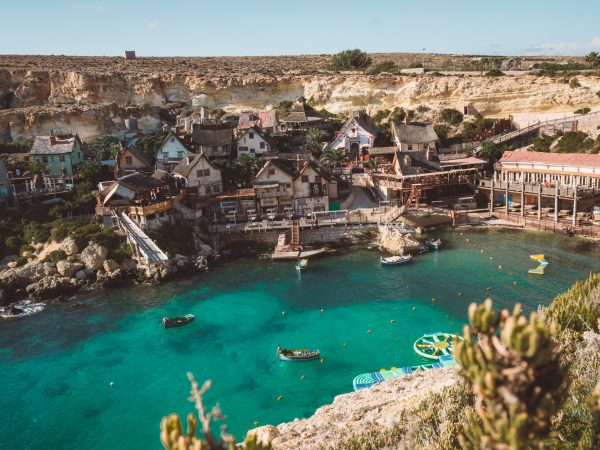
Malta: 15 wonderful highlights & sights you cannot miss
The small Mediterranean state of Malta south of Sicily, which consists of the three inhabited islands of Malta, Gozo and Comino , is one of the smallest states in Europe. You might think that there isn’t much to discover here, but the opposite is the case: The history of the islands goes back over 6000 years and Malta is still characterized by unique historical architecture, a special mix of British, southern Italian and Arab Culture and varied landscapes with crystal clear beaches and impressive cliffs. Last but not least, Malta has over 300 days of sunshine a year – reason enough for me to finally fulfill my wish for a Malta vacation . I spent a total of 9 days in Malta and still I have the feeling that there is still so much to discover there and that I absolutely have to come back. In this article I’ll tell you the most beautiful highlights and sights in Malta and there are also a few insider tips on top. Here we go! Malta’s capital Valletta With only approx. 500,000 inhabitants, Malta is one of the smallest countries in Europe, almost 400,000 of the inhabitants live in the metropolitan area of the capital Valletta. That seems like a lot at first, but it is still possible to explore the city center of Valletta with all its sights within a day on foot, because Valletta itself has just under 6000 inhabitants. Valletta is the smallest capital of an EU state and has been a UNESCO World Heritage Site since 1980 due to its cultural wealth. Let yourself drift between the colorful balconies of the old town The architecture, which immediately catches the eye, is very typical for Malta and especially for Valletta: In the entire old town, historical buildings and houses are lined up, all of which are decorated with colorful doors, balconies and bay windows. The city center is slightly elevated, you have to climb wide stairs again and again and the outward sloping side streets reveal the view of the blue glittering sea. Valletta is surrounded by thick, high city walls and is one of the best historically secured cities in the world. The best thing to do is just let yourself drift through the centuries-old alleys, shoot a million photos and just soak up the atmosphere of this fascinating city – you basically automatically pass Valletta’s most important sights. Wide stairs, colorful balconies, historic townhouses – that’s typical of Valletta The most beautiful sights of Valletta If you don’t just want to let yourself drift, but also want to go to and visit some sights, you should plan a second day for Valletta. Here are the most interesting spots at a glance: The Upper Barrakka Gardens St. John’s Co-Cathedral The Grand Masters Palace Fort St. Elmo The Casa Rocco Piccola The Theatru Manoel The Carmelite Church They are all within walking distance of each other in the historic old town of Valletta. The best way to explore Valletta is on a private tour with a local guide * , who can give you valuable background information on all the places. Here you can find out everything about Valletta’s most important and beautiful sights . The red telephone boxes are a typical remnant of the British colonial days in Malta My tip: Parking in Valletta is virtually impossible, so the best way to travel is by bus. If you want to come by car, then park outside of Valletta on the opposite side of the bay in the town of Vittoriosa. If you get there early enough in the morning, you will get a parking lot there at the harbor. From there you just take a water taxi over to Valletta – these are small wooden boats that strongly reminded me of the gondolas in Venice, only with an electric motor. The trip costs just € 2 per person, takes only 5-10 minutes and is an experience in itself that you shouldn’t miss. When you arrive at the port of Valletta, just a 2-minute walk away, an elevator for € 1 per person takes you up to the Upper Barrakka Gardens. There you start your city tour. For the way back you take a water taxi again, it drives back to the same place. There is a harbor tour for little money with the water taxi between Valletta and Vittoriosa The Three Cities: Vittoriosa, Senglea & Cospicua The “Three Cities” are the three cities that lie on a headland opposite the southern bay of Valletta: Vittoriosa, Senglea & Cospicua . It’s a lot quieter here than in Valletta, everything is less crowded and even more original. In Senglea it is worth visiting the small Safe Haven Gardens at the top of the city, from there you have a great view of the bay and Valletta with its thick city walls. Vittoriosa was one of my personal highlights in Malta – the picturesque streets with their old houses, which trump each other with colorful doors and pretty flower tendrils, are simply beautiful. We spent hours there drinking coffee and taking photos and couldn’t get enough, so now – sorry for that – a little spam pictures: The picturesque streets of Vittoriosa are among the top sights in Malta My tip for light photo equipment when traveling Would you like to take great photos on the go without having to carry too much with you? It doesn’t take much for that! The heart of my equipment, which I also used on Malta, are: My camera: Sony Alpha 6500 * An all-round lens from Sigma 17-70mm * (connected via adapter * ) A 30mm prime lens with 1.4 aperture from Sigma * (this prime lens will revolutionize your pictures, I promise!) A light, stable travel tripod * (for long exposures and if you want to take photos of yourself) My DJI Spark drone * With this mini-equipment I shoot 90% of my pictures. You can get a complete overview of my equipment here >>> my photo equipment * If you would like to learn more about the history of the Three Cities, a guided tour through the three cities * is worthwhile . Alternatively, you can do the whole thing as part of a leisurely harbor tour in a traditional Maltese boat * . My tip: As mentioned above, a water taxi runs between Vittoriosa and Valletta for only € 2. The drive through the bay is really impressive and the fastest way between Valletta and the Three Cities, so you can easily combine the visit. Mdina & Rabat Another charming town in Malta is Mdina. Although “town” is perhaps a bit misleading, because Mdina is after all the old capital of Malta . After Valletta was named the capital of Malta in the 16th century, the people of Mdina gradually turned their backs and moved to the new capital. Today Mdina has less than 300 inhabitants and time seems to have stood still hundreds of years ago. In Mdina you will see more horse-drawn carriages than cars (the city is car-free, only residents have access) and at least in the evening the labyrinth-like streets are deserted. Therefore Mdina is also called “The Silent City”. Mdina is surrounded by a massive fortress wall In no other city have I seen so many beautiful photo motifs (the colorful wooden doors! <3) and well-preserved medieval buildings in such a small space. The absolute highlight of Mdina is the imposing city gate, one of the most famous filming locations for Game of Thrones. If you’d like to learn more about the history of the city, you can join a guided tour of Mdina * . For me, Mdina is one of the most beautiful places in Malta – an absolute recommendation! My tip: The Café Fontanella in Mdina is known for the best chocolate cake Malta. There is a large selection of snacks and cakes (there are around 10 different types of chocolate cake alone), which you can enjoy wonderfully relaxed on the roof terrace of the Fontanella with a magnificent view of the island in good weather. The city of Rabat borders directly on the imposing walls of Mdina . Here it is also worthwhile to stroll a little through the pretty old town streets. There are a few small shops where you can buy souvenirs and, for example, around the collegiate church of St. Paul a handful of cafés and restaurants that looked very inviting. My tip: Do you want to try a real Maltese specialty, then there is the Is-Serkin super delicious in Rabat Pastizzi . Pastizzi are Maltese dumplings that are filled with chicken, spinach or cheese, for example. Although Is-Serkin doesn’t look particularly inviting from the outside, you can get authentic Maltese freshly baked pastizzi straight out of the oven for just 40-50 cents each. St. Paul’s Catacombs If you are already in Rabat, then you should not miss a visit to one of the most famous sights of Malta: St. Paul’s Catacombs . The burial chambers were probably used until the 7th or 8th century and around 20 of them are open to the public today. One of them even exhibits bones. You can visit them for 6 € entry. Gozo: A detour to Malta’s sister island The island of Gozo is a small neighboring island north of the main island and also belongs to the Republic of Malta. You can reach them easily with the ferry from Cirkewwa, which runs every 30-60 minutes throughout the day. There is no need to pre-book tickets, you just pay on the way back when you translate from Gozo to Malta. The journey takes about 25 minutes and you can travel on foot or by car. You should plan at least a full day for Gozo – we spent a total of almost three days on the islet to be able to explore everything. Gozo is much more comfortable than Malta, especially during the week. At the weekend, many locals use Gozo for a little mini vacation, because there is Ramla Bay, the longest sandy beach in Malta. Here is an overview of the most important highlights and sights on Gozo: The citadel in the capital Victoria The area around Dwejra with the Blue Hole, the Inland Sea and the former Azure Window, which unfortunately collapsed in 2017 Wied-Il-Mielah (the “new Azure Window”) Wied-Il-Gashri The salt pans Ramla Bay with the famous viewpoint in the Tal-Mixta Cave The temples of Ggantija The Tal-Mixta Cave on Gozo overlooking Ramla Bay The Gozo Salt Pans A hiking trail leads along above the Inland Sea You see, Malta’s little sister Gozo has a lot to offer. There are a number of providers with whom you can explore most of these spots as part of a day tour: Gozo day tour by jeep * Gozo day tour by quad * Explore Gozo with the hop-on / hop-off bus * If you want to stay 1-2 nights in Gozo, I can warmly recommend Andrew’s Airbnb , because there is a pool and Andrew is super nice. I stayed there for two nights. If you are not yet registered with Airbnb, you can get a discount of up to € 25 on your first trip here * . Comino & the Blue Lagoon The mini island of Comino is located between Malta and Gozo and is home to a very special highlight that you have probably already seen in countless pictures in connection with Malta: the famous Blue Lagoon . I really don’t want to exaggerate, but the water in the blue lagoon is so unbelievably turquoise and clear as I’ve only seen it in the Caribbean in Aruba and the Bahamas , in Europe a maximum of a few lagoons in Sardinia come close to this spectacle. The blue lagoon on Comino is therefore quite rightly an absolute top highlight in Malta and if it had been up to me, I would have spent the whole day there. There is one downer, however, that I would not like to withhold from you: The blue lagoon is so famous that it is unfortunately completely overrun. If you are looking for peace and relaxation, you have come to the wrong address. There is only a tiny stretch of beach (but you can lie on the rocks) and thanks to the many stalls and people there is more of a fairground feeling than a holiday feeling. Nevertheless, Comino and the blue lagoon are definitely worth a visit, because the crystal clear turquoise sea alone will put a smile on your face all day long. It’s best to book a boat tour in advance. The boat tours cost about 25 € for a day trip and you not only drive to the blue lagoon, but also circumnavigate Comino and make various stops at some caves and beautiful snorkeling spots. Here are some recommended tours: Boat tour to Comino & the Blue Lagoon * Boat tour to Gozo, Comino & the Blue Lagoon * The fishing village of Marsaxlokk The small fishing village of Marsaxlokk is located in the very south-east of Malta and with its hundreds of colorful wooden boats and old fishermen’s houses is an Eldorado for every photographer. Not only do the boats line up on the harbor promenade, but also the restaurants and cafes. Take 2-3 hours to stroll a bit along the promenade and enjoy a cool iced coffee. If you like, you can have a fisherman take you to the nearby St. Peter’s Pool. During the week there is a small market where you can buy all kinds of tourist souvenirs. However, it is more exciting on Sundays, because then the traditional fish market takes place in Marsaxlokk. St. Peter’s Pool (including insider tip) St. Peter’s Pool is just a few minutes’ drive from Marsaxlokk. The small bay has long been a major tourist magnet and is considered one of the most beautiful beaches in Malta. Whereby “beach” in Malta is really a matter of definition, because a beach is anything that offers access to the sea and a little space to lie on. The St. Peter’s Pool is more of a rock plateau where the sea has eaten a kind of pool into the coast. In any case, the water is wonderfully clear and turquoise blue. The surrounding plateau consists of light-colored rocks – it looks nice, but also reflects properly in blazing sun and there are no shady spots. We were at St. Peter’s Pool in the early hours of the morning and it was so incredibly hot at that time that we ran away very quickly. My tip: Not far away is Il-Kalanka Bay, which is very similar to St. Peter’s Pool. You will hardly find any tourists there, almost only locals. There is a parking lot directly above the bay. Insider tip Il-Kalanka Bay: Only a few minutes away from St. Peter’s Pool The blue grotto The Blue Grotto is THE symbol of Malta. On the south-western steep coast of Malta, the sea has carved several caves into the coastline over the millennia, the largest and most impressive of which is the blue grotto with a height of 40m. On the road there is a lookout point, the Blue Grotto Viewpoint (just enter it on Google Maps), from which you have a great view from above of the imposing entrance of the cave. You can get even closer to the blue grotto, however, because boats from the nearby harbor go into the blue grotto every minute (the way to the harbor is well signposted from the viewpoint). The trip costs € 8 per person and takes about 15-20 minutes, and you will also head to a few other caves. If you prefer something a little more unusual, you can also book a several-hour kayak tour along the coast, e.g. with MC Adventure (the tours only take place in normal waves for safety reasons, so you should bring a little flexibility for this adventure, as the tours are accordingly must be planned depending on the weather). The ruins of Ħaġar Qim and Mnajdra Very close to the Blue Grotto are the ruins of Ħaġar Qim and Mnajdra, two more than 5000 years old temple complexes. They are among the most important sights in Malta, but since the island is home to many other temples and we have already looked at temple ruins on Gozo, we have left them out here. However, for the sake of completeness, they should not be missing. To protect them from the weather, these temples are under large tarpaulins, which makes taking photos a little more difficult (if that’s important to you). Entry costs € 10. The hypogeum of Ħal-Saflieni Unfortunately, we also had to skip the hypogeum of flal-Saflieni, because the old burial chamber is only allowed to visit a maximum of 80 people per day as part of a guided tour. As the Hypogeum is one of the main attractions in Malta, tickets are often booked out weeks in advance. Of course, we missed that and the admission price of € 35 (or € 40 for last minute tickets at the box office) is really not a bargain, so we decided to go to St. Paul’s Catacombs instead. If you want to visit the Hypogeum, you can book tickets here in advance. Incidentally, photography is not allowed in the burial chambers. Force of nature on Malta’s west coast: The Dingli Cliffs (including an insider tip for an alternative hike) The Dingli cliffs are located on Malta’s west side and are a particularly impressive section of the cliff. It is best not to drive to the point that marks the Dingli Cliffs on Google Maps, because then you will be directly above the cliffs and unfortunately see very little. You have a better view from the Dingli Viewpoint or, if you walk a little further out onto the headland, from the Dingli Cliffs Panoramic View . It’s obviously quite windy at the Dingli Cliffs … Unfortunately, there is no hiking trail along the rocky coast here, but I have an alternative for you that hardly anyone knows: A little further north there is a kilometer-long hiking trail between Migra I-Ferha and Il-Blata tal-Melh directly along the steep coast. The view from there is gigantic! It is best to start your hike in the early evening hours in Migra I-Ferha (there is a large parking lot there) and take the breathtaking sunset with you (reminder: you are on the west side of the island, i.e. sunset side). You can either walk the entire route or just part of it and then just go back the same way. The stretch of coast between Migra I-Ferha and Il-Blata tal-Melh is one of the most beautiful hiking trails in Malta At sunset, high above Malta’s golden beaches to the west For me an absolute chance find and THE highlight of my entire trip to Malta were 4 beaches in the west of the island: Golden Bay, Riviera Beach, Qarraba Bay and Gnenja Bay Beach . The beaches are located in the northwest of the island and are connected to each other by a hiking trail high above the individual bays . View of the Golden Bay The Riviera Beach I really didn’t know beforehand what to expect and only had a hunch that it could be pretty here at sunset – but the spectacle that we got then really exceeded all expectations. I don’t really know how to describe it, so I just let the pictures speak for themselves: Gnejna Bay Beach can be seen in the distance For me, this spot is definitely one of the most scenic in all of Malta and a real recommendation from my heart. Strangely enough, I didn’t read anything about it in advance when planning my trip, so it actually still seems to be a kind of insider tip. It’s best to start your hike at golden hour, 1-2 hours before sunset and just run as far as you can. There is a parking lot between Golden Bay and Riviera Beach, where you can park (a grandpa is charged according to the pay-what-you-want principle, we gave him € 2). If you want, you can of course spend a few hours in the sun on the beach beforehand. Golden Bay and Riviera Beach are among the most beautiful and spacious beaches on Malta, so a visit is worth twice as much. Popeye Village Less secret, but one of the most famous sights in Malta is the Popeye Village. The setting built in 1979 for the shooting of – you guessed it – the film Popeye is now a small amusement park, which is especially worthwhile for families with children (admission 15 €). For us adults, a short stop above the turquoise blue bay (Anchor Bay), which offers a great view of the colorful film backdrop, is enough. You can also swim in Anchor Bay, which is considered to be one of the most beautiful beaches in Malta (… you know the Maltese definition of “beach”). By the way, the Red Tower (St. Agatha’s Tower) is nearby , which houses a small museum (which was closed for us, however). The Coral Lagoon & Malta’s northern tip Another insider tip is the Coral Lagoon in Malta’s extreme northeast, also called Devil’s Hole by the locals . On the way there you will pass a number of small beaches that are usually quite crowded. Just follow the path to Coral Beach , there you will find a fascinating rocky landscape that is much emptier. If you follow the cliffs further, you will eventually come across a natural pool . In contrast to St. Peter’s Pool, the sea did not eat its way into the rock here, but only dug a small tunnel into the interior of the pool and formed a real hole. The water is, how could it be otherwise, crystal clear and turquoise. Holidays in Malta: travel tips & practical information Finally, I would like to give you a few more tangible tips for planning your Malta vacation in a nutshell. For even more information and tips, a classic travel guide is definitely worthwhile.